Form DS-3053 is the Statement of Consent used when a parent or guardian cannot appear for a child’s under-16 U.S. passport application. The absent parent completes the relevant sections, signs through the required notarization process and provides the identification copy specified by the form.
DS-3053 accompanies the child’s application. It does not replace DS-11, establish citizenship or give permission for a particular international trip.
When do you need DS-3053?
Both parents or guardians normally apply in person with a child under 16. When one is unavailable, their properly completed consent form can allow the other parent to submit the application. If neither can appear, the person accompanying the child generally needs appropriate authorization from both parents or guardians.
A parent with sole legal authority may instead provide the documents establishing that authority. If a parent cannot be located or there are special family circumstances, consult the official child passport instructions about the relevant evidence and DS-5525. That route is reviewed case by case; it is not an automatic substitute for consent.
Read this graphic as text
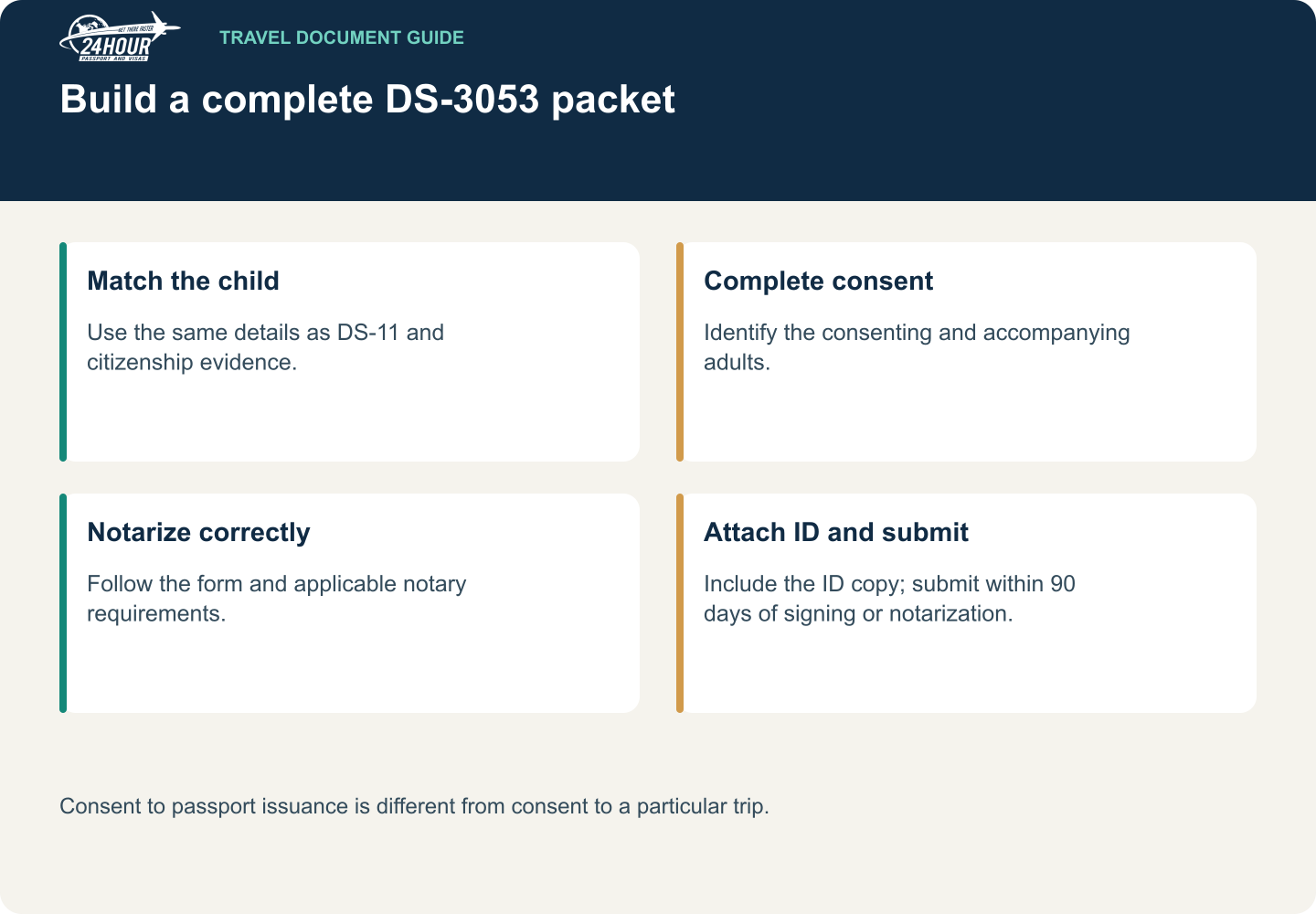
- Match the child: Use the same details as DS-11 and citizenship evidence.
- Complete consent: Identify the consenting and accompanying adults.
- Notarize correctly: Follow the form and applicable notary requirements.
- Attach ID and submit: Include the ID copy; submit within 90 days of signing or notarization.
Consent to passport issuance is different from consent to a particular trip.
How to prepare the form
- Download the current government form. Use the State Department passport forms page. The form itself is free.
- Enter the child’s details exactly. Check spelling and date of birth against DS-11 and the child’s citizenship document.
- Identify the consenting parent or guardian and the person applying with the child. Make sure the authorization describes the actual arrangement.
- Complete notarization correctly. Do not pre-sign a section that must be signed before the notary. Follow the form’s identification and notary instructions.
- Include a clear front-and-back copy of the identification presented for notarization. Check that no edge, date or image is cut off.
- Send the completed consent packet to the attending parent or authorized person. They bring it with the child’s other application documents.
The most useful final check is to compare the consent packet with the appointment plan. The correct parent, child and accompanying adult should appear consistently across the records.
How long is a notarized DS-3053 valid?
The State Department requires DS-3053 and other notarized consent statements to be submitted within 90 days after signing or notarization. Plan from the application submission date, not the travel date.
If an appointment moves, recheck the consent’s age. A form prepared early can become unusable while the family waits for a new appointment. Keep a copy for your records, but follow the form and agency instructions about what must be submitted.
What if the absent parent is overseas?
Start with the official country-specific notarization instructions before visiting a local notary. In certain countries, the form must be notarized at a U.S. embassy or consulate rather than by a local notary.
Also account for appointment availability and delivery time for the completed paperwork. Electronic notarization is accepted when it meets applicable state law and the State Department’s requirements; do not assume every online notary service or scanned signature qualifies.
Common reasons the consent packet causes problems
- The child’s information does not match DS-11.
- The form is incomplete or outside the 90-day submission window.
- The ID copy is missing, unclear or does not show both sides.
- The notarial section is incomplete.
- The document authorizes a different person from the one attending.
- A parent presents a custody arrangement without evidence of sole legal authority or the other parent’s required consent.
Check these details before the appointment rather than discovering a missing page at the counter.
Frequently asked questions
Is DS-3053 a travel consent letter?
No. It concerns issuance of the passport. A destination, airline or border authority may separately require permission for a child to travel with one parent or another adult.
Does a teenager need the same form?
The standard process changes at 16. See our teen passport guide for parent awareness and situations where more evidence may be requested.
Can an expediter waive a missing parent’s consent?
No. Our child passport service can help with preparation and eligible expedited handling. The government determines whether consent and authority documents meet its requirements.
Tell us your destination, departure date and application status. Call first to arrange a visit to our Los Angeles office.
Call (310) 913-7804